Categories
Window Tinting and Films

How to Keep Your Window Film Looking Crystal Clear

Maintaining the pristine look of your window films is essential to enhance the beauty and functionality of your living spaces. High-quality window films, like those offered by 3M, not only elevate the aesthetic appeal of your interiors but also provide energy efficiency and UV protection. However, to keep them looking their best, a little care and maintenance go a long way. In this guide, we will explore effective strategies for window film maintenance, ensuring they remain crystal clear and serve their purpose for years to come.

Window film acts as a shield against harmful UV rays and reduces glare while offering an extra layer of privacy. Over time, dust, smudges, and other environmental factors can affect their appearance and performance. According to the U.S. Environmental Protection Agency, limiting UV exposure is important for protecting both skin and interior furnishings. Regular maintenance ensures that your window films remain effective and visually appealing.

Benefits of Regular Maintenance

  1. Prolongs Lifespan: Proper care can significantly extend the life of your window film, saving you money on replacements.
  2. Maintains Clarity: Regular cleaning prevents the accumulation of dirt and grime, ensuring your view remains unobstructed.
  3. Preserves Energy Efficiency: Clean window films continue to reflect heat effectively, contributing to reduced energy bills. The U.S. Department of Energy notes that efficient window solutions can play a major role in lowering household energy use.

Best Practices for Cleaning Window Films

Cleaning supplies for window film

Cleaning window films requires a gentle touch to avoid scratching or damaging the film. Here are some best practices to follow:

Use the Right Cleaning Solutions

When it comes to cleaning window films, not all solutions are created equal. Avoid using ammonia-based products as they can damage the film. Instead, opt for a mild, non-abrasive cleaner or a mixture of water and dish soap.

Gentle Cleaning Tools

Use a soft cloth or a microfiber towel to clean the film. Harsh materials like steel wool or rough sponges can scratch the surface. A squeegee can also be used to remove excess water and prevent streaks.

Step-by-Step Cleaning Process

  1. Dust First: Use a dry cloth or duster to remove surface dust.
  2. Prepare the Solution: Mix a few drops of dish soap with water in a spray bottle.
  3. Spray the Film: Lightly spray the solution onto the window film.
  4. Wipe Gently: Use a soft cloth to wipe the film in a circular motion.
  5. Dry Completely: Use a squeegee or a dry microfiber cloth to remove any excess solution and prevent water spots.

Protecting Window Films from Damage

Sunlight streaming through a window

by Lhar Capili (https://unsplash.com/@lhardeleon)

While cleaning is crucial, protecting your window films from potential damage is equally important. Here are some tips to ensure your films remain intact:

Avoid Direct Contact

Keep sharp objects and abrasive materials away from the film. This includes pets’ claws, furniture edges, and any tools that might scratch the surface.

Manage Indoor Temperature

Excessive heat can cause some window films to bubble or peel. Ensure that your indoor temperature is regulated, especially during extreme weather conditions. Using curtains or blinds can also help protect the film from direct sunlight.

Educate Household Members

Make sure everyone in the household is aware of the proper handling of window films. This includes not using harsh chemicals or scrubbing the film aggressively.

Common Issues and Solutions

Despite your best efforts, issues may arise. Here’s how to address some common problems:

Film Peeling

Peeling can occur due to improper installation or exposure to extreme conditions. If you notice peeling, consider reapplying the film or consulting a professional for repairs.

Bubbling

Bubbles under the film often indicate trapped air or dust during installation. Small bubbles may disappear over time, but persistent bubbles may require a professional to reapply the film.

Scratches

Minor scratches can sometimes be buffed out with a soft cloth and a gentle cleaner. For deeper scratches, replacing the affected section may be necessary.

Choosing the Right Window Film

Selecting a high-quality window film is the first step towards easy maintenance and long-lasting performance. Brands like 3M offer films with advanced features such as UV protection, anti-glare, and energy efficiency. Investing in a reputable brand ensures you receive a product designed to withstand the test of time.

Considerations for Selection

  1. UV Protection: Choose films that block a high percentage of UV rays to protect your interiors from fading.
  2. Heat Rejection: Opt for films that offer excellent heat rejection to enhance energy efficiency.
  3. Aesthetic Appeal: Select films that complement your interior design and offer the desired level of privacy.

Conclusion

Maintaining your window films doesn’t have to be a daunting task. By following these simple cleaning and protection tips, you can keep your films looking crystal clear and performing at their best. Regular maintenance not only preserves the aesthetic and functional benefits of window films but also extends their lifespan, offering you more value for your investment.

Remember, whether you’re an interior designer seeking to enhance your client’s space or a homeowner looking to improve energy efficiency, the right care and maintenance of window films can make all the difference. With a little effort and the right products, your window films will continue to shine brightly, enhancing the beauty and comfort of your home.
Categories
Window Tinting and Films

Everything to Know About Window Film Installation Near Me

Window film installation is an excellent way to enhance your home’s comfort, efficiency, and aesthetics. Whether you are an interior designer looking for cost-effective solutions or a homeowner seeking to improve your living space, window film can offer numerous benefits.

In this comprehensive guide, we will explore everything you need to know about window film installation near you. We’ll cover the benefits, types, installation process, and how to choose the right professional service. Let’s dive in!

Window film is a thin laminate that can be installed on the interior or exterior of glass surfaces in homes, offices, and vehicles. It is typically made from polyester and offers a range of benefits, from reducing glare and UV exposure to enhancing privacy and security. According to the U.S. Department of Energy, window films can significantly improve energy efficiency by reducing heat gain through glass.

Benefits of Window Film

Window film offers several advantages:

  • Energy Efficiency: Window films can help reduce energy consumption by blocking heat from the sun, keeping your home cooler in the summer and warmer in the winter. This can lead to significant savings on energy bills.
  • UV Protection: It blocks up to 99% of harmful UV rays, protecting your furniture, flooring, and artwork from fading.
  • Glare Reduction: Window film reduces glare from the sun, making it more comfortable to watch TV or work on a computer.
  • Privacy and Security: Tinted or frosted films provide privacy without compromising natural light. Security films can also hold shattered glass together, adding an extra layer of protection.
  • Aesthetic Appeal: Available in various styles and patterns, window films can enhance the look of your home, complementing any interior design.

Types of Window Film

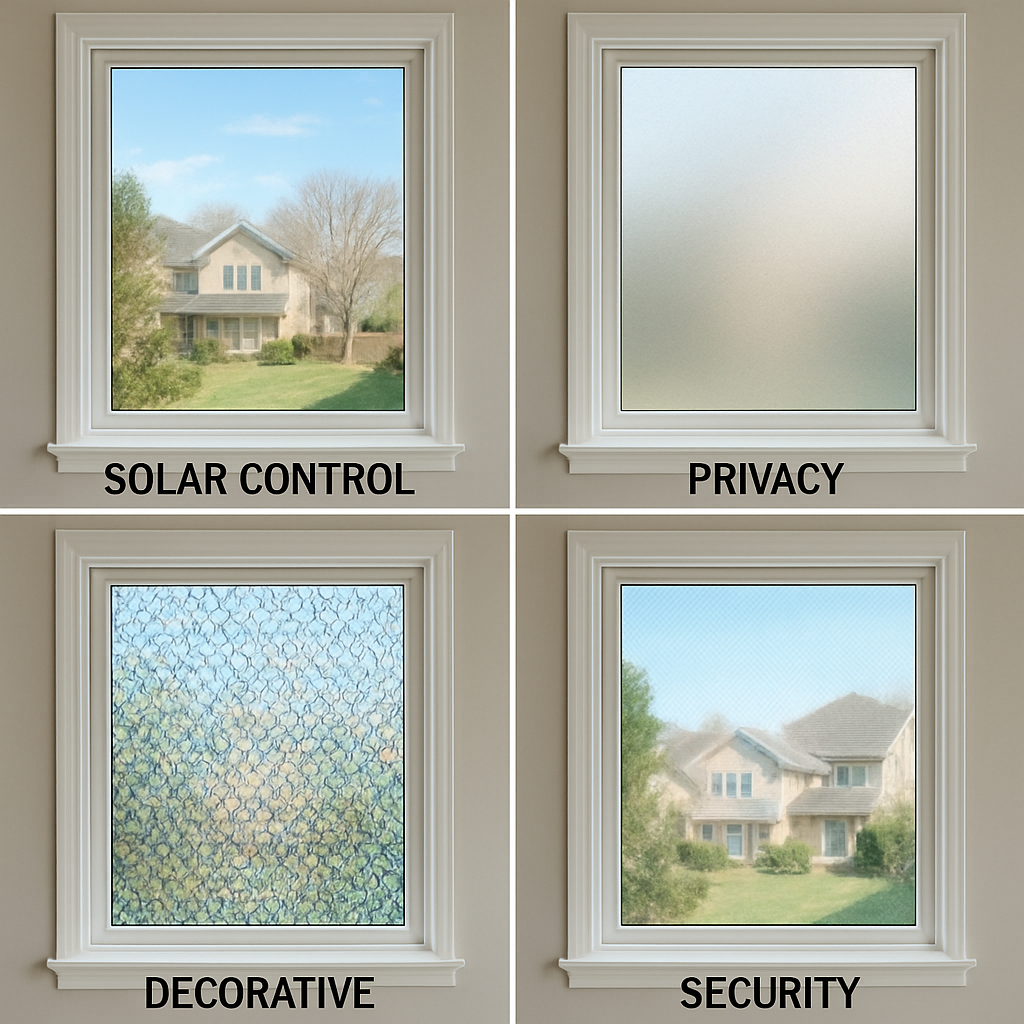
Different types of window films

There are several types of window films, each designed to meet specific needs:

Solar Control Film

Solar control films are designed to reduce heat and glare. They are ideal for rooms that receive a lot of sunlight, helping to maintain a comfortable indoor temperature.

Decorative Film

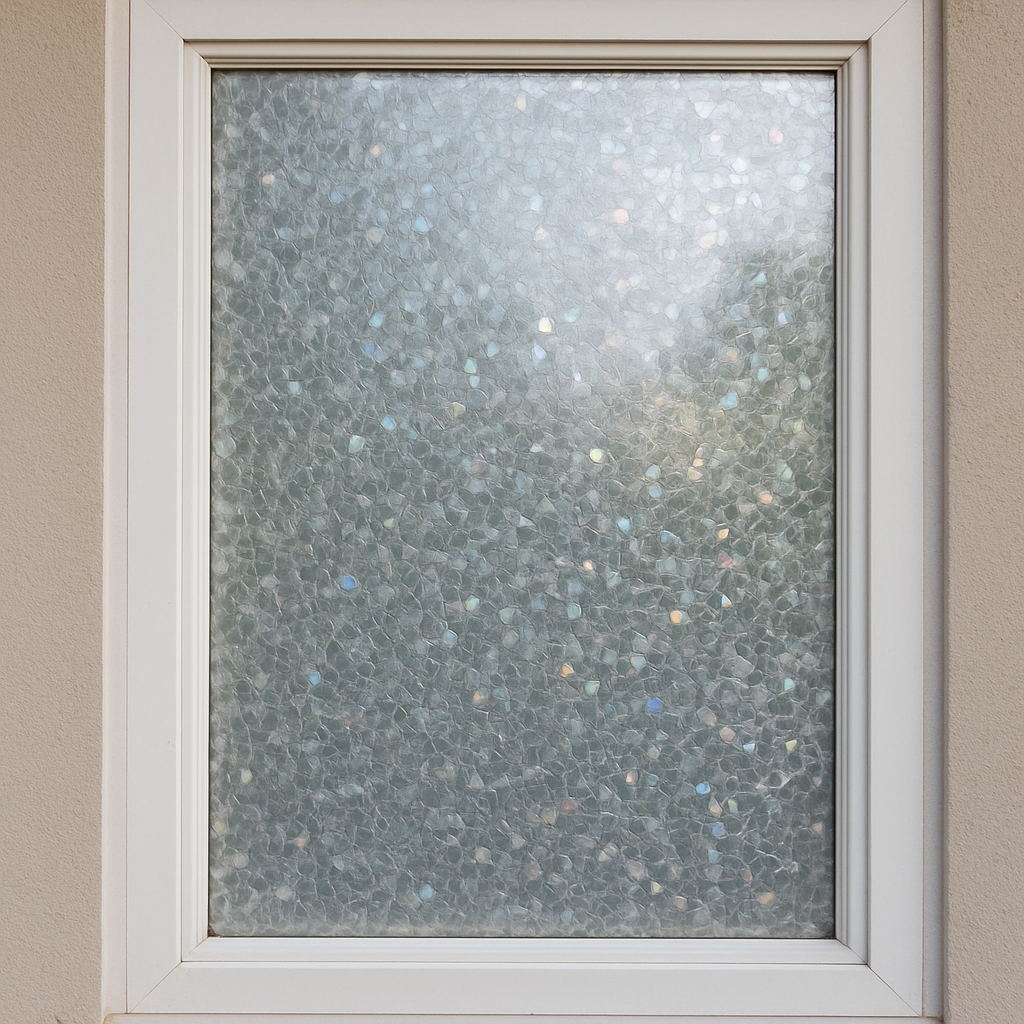
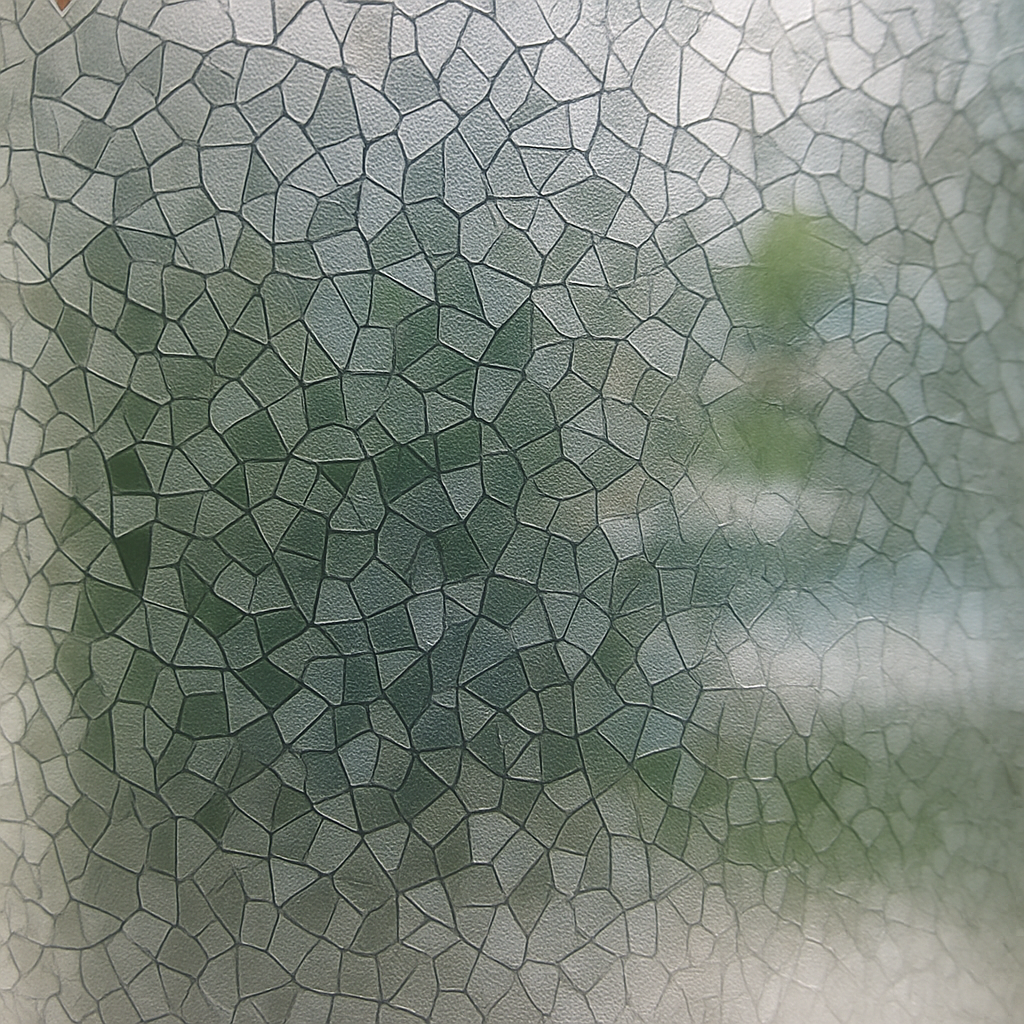
Decorative films add style and privacy to your windows. They come in various patterns, colors, and textures, allowing you to customize the look of your space.

Security Film

Security films are thicker than regular window films and are designed to hold glass together if it shatters. This can deter break-ins and protect against accidents or natural disasters. Safety glazing standards from the U.S. Consumer Product Safety Commission emphasize the importance of reinforced glass protection for preventing injuries.

Privacy Film

Privacy films are perfect for areas where you want to maintain natural light while ensuring privacy, such as bathrooms or street-facing windows.

The Window Film Installation Process

The installation process for window film is straightforward but requires precision for the best results. Here’s what to expect:

1. Consultation and Selection

The first step is to consult with a professional to discuss your needs and preferences. They will help you select the right type of film based on your goals, whether it’s energy efficiency, privacy, or aesthetic enhancement.

2. Preparation

Before installation, the windows must be thoroughly cleaned to ensure the film adheres properly. Any dirt or debris can cause bubbles or imperfections in the film.

3. Cutting and Application

The film is then cut to the exact size of your windows. Professionals use precise tools to ensure a perfect fit, avoiding any gaps or overlaps.

4. Final Touches

After application, the film is carefully smoothed out to remove any air bubbles. The edges are trimmed, and the film is inspected to ensure a seamless finish.

Choosing the Right Window Film Professional

Professional window film installation

by Zen Summer (https://unsplash.com/@ispywithmylittleeye)

Selecting a qualified professional for window film installation is crucial to achieving the best results. Here are some tips to guide your choice:

Experience and Reputation

Look for professionals with extensive experience in window film installation. Check reviews and testimonials to gauge their reputation and the quality of their work.

Product Knowledge

A reliable installer should have a deep understanding of different types of window films and their applications. They should be able to recommend the best options for your specific needs.

Warranty and Support

Choose a service provider that offers a warranty on their work and the film itself. This ensures that you are covered in case of defects or installation issues.

Transparent Pricing

Request a detailed estimate before starting the project. A trustworthy professional will provide transparent pricing without hidden fees.

Maximizing the Benefits of Window Film

To make the most of your window film installation, consider these additional tips:

Regular Maintenance

While window films are low maintenance, regular cleaning with a soft cloth and mild detergent will keep them looking their best. Avoid abrasive cleaners that can damage the film.

Combining Solutions

Consider combining window film with other window treatments, such as blinds or curtains, for enhanced privacy and energy efficiency.

Stay Informed

Keep up with new developments in window film technology. Innovations are constantly being made, offering new ways to improve your home’s comfort and efficiency.

Conclusion

Window film installation is a smart investment for any homeowner or interior designer looking to enhance a space’s energy efficiency, privacy, and aesthetic appeal. By understanding the types and benefits of window film, and choosing the right professional for installation, you can transform your windows and enjoy a more comfortable living environment.

Whether you are looking to reduce energy bills, protect your interiors, or simply add a touch of style, window film is a versatile solution that can meet a variety of needs. So, if you’re considering window film installation near you, now is the time to explore this innovative home improvement option.

Categories
Window Tinting and Films

Step-by-Step Guide to Applying Window Tint Film

Applying window tint film is a practical and stylish solution for enhancing your living space. Whether you’re aiming to reduce glare, increase privacy, or improve energy efficiency, window tinting can meet these needs effectively. This guide will walk you through the process of applying window tint film, ensuring a professional finish without the professional price tag.

Window tint film offers several advantages that make it a popular choice for homeowners and interior designers alike.

Energy Efficiency

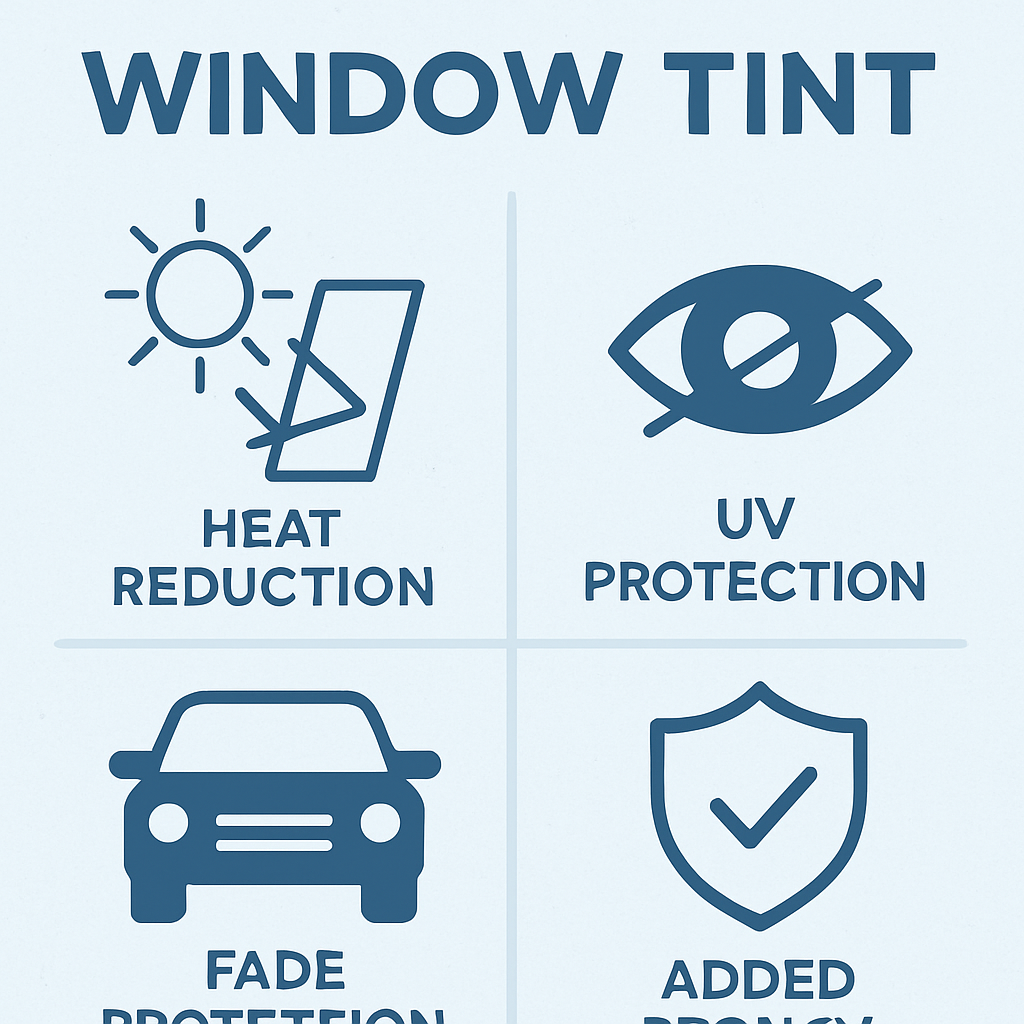
By blocking a significant amount of solar heat, window tinting reduces the need for air conditioning during the warmer months, thereby lowering energy bills. According to the U.S. Department of Energy, window treatments that reduce heat gain can significantly improve indoor energy efficiency.

UV Protection

Tinted windows block up to 99% of harmful ultraviolet rays, protecting your furniture, flooring, and other interior elements from fading. The Environmental Protection Agency (EPA) confirms that limiting UV exposure is essential for protecting both skin and interior materials.

Enhanced Privacy and Security

Tint films provide an extra layer of privacy by making it difficult for outsiders to see inside during the day. They also offer an added measure of security by holding glass together if it breaks.

Improved Aesthetics

Tinted windows can enhance the overall look of your home, giving it a sleek and modern appearance.

Tools and Materials Needed

Before you start the application process, gather the following tools and materials:

  • Window tint film (pre-cut to the size of your windows)
  • Spray bottle filled with a mixture of soap and water
  • Squeegee
  • Utility knife
  • Lint-free cloth or paper towels
  • Measuring tape
  • Straight edge or ruler

Step-by-Step Application Process

window_tint_application

Step 1: Measure and Cut the Film

Begin by measuring the dimensions of the window you wish to tint. It’s crucial to measure both the height and width accurately. Once measured, roll out the window tint film on a clean surface and use a utility knife to cut the film slightly larger than the window itself. This excess will be trimmed off later for a perfect fit.

Step 2: Clean the Window

A clean surface is vital for a successful application. Use a lint-free cloth and the soap-water solution to thoroughly clean the window, ensuring all dust, grease, and debris are removed. Pay special attention to the corners and edges, as any residue can cause bubbles or peeling later.

Step 3: Wet the Window

Spray the window generously with the soap-water solution. This step is crucial as it allows you to slide the film into the correct position and helps prevent the film from sticking prematurely.

Step 4: Apply the Tint Film

Peel the backing off the tint film, revealing the adhesive side. Carefully place the film onto the wet window, starting from the top and working your way down. The soap-water solution will help you reposition the film as needed.

Step 5: Squeegee the Film

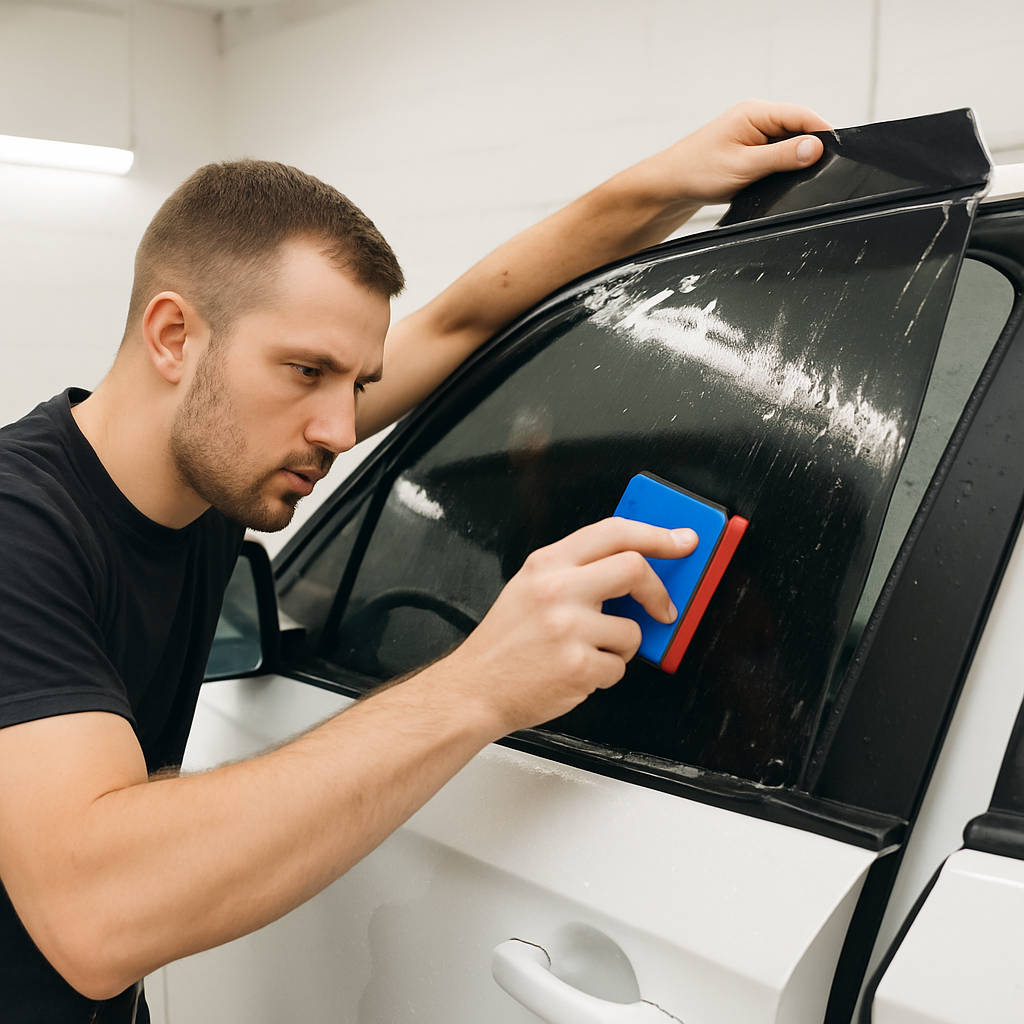
Once the film is in place, use a squeegee to remove any air bubbles and excess water. Start from the center and work your way towards the edges, applying firm and even pressure. Take your time during this step to ensure a smooth, bubble-free finish.

Step 6: Trim the Excess Film

With the film securely in place, use a utility knife and a straight edge to trim away any excess film along the edges of the window. This will give you a clean and professional look.

Step 7: Final Inspection and Drying

Inspect the film for any remaining bubbles or imperfections. Use the squeegee to address these areas if necessary. Allow the film to dry for at least 24 hours before cleaning or touching the surface.

Tips for Success

window_tint_tips

by Aditya Shetty

  • Work in a Dust-Free Environment: Any dust particles trapped between the film and the window can cause bubbles.
  • Avoid Direct Sunlight: Apply the film in a shaded area to prevent the solution from drying too quickly.
  • Take Your Time: Rushing through the process can lead to mistakes. Ensure each step is completed thoroughly for the best results.

Common Mistakes to Avoid

  • Improper Cleaning: Ensure the window is completely free of dirt and debris before application.
  • Incorrect Measurements: Double-check your measurements before cutting the film.
  • Ignoring Bubbles: Address any bubbles immediately with a squeegee to prevent them from becoming permanent.

The Final Verdict

Window tint film application is a cost-effective way to enhance the appearance and functionality of your windows. With the right tools and a careful approach, you can achieve professional results without the need for a professional installer. Whether you’re an interior designer looking to offer stylish solutions or a homeowner seeking to improve energy efficiency, window tinting is a versatile and valuable addition to any space.

Incorporating window tinting into your home improvement projects not only elevates the aesthetic appeal of a space but also provides practical benefits that align with modern living needs. By following this step-by-step guide, you can confidently apply window tint film and enjoy the myriad benefits it brings to your home.